-
Larger, Healthier Plants
More Value for Your Garden -
Nationwide Free Delivery
Fresh Plants to Your Doorstep -
Easy Online Shopping
Your Dream Garden in a Few Clicks


Flame Seedless Grape
Flame Seedless Grape
Couldn't load pickup availability
USDA Zones/Minimum Temperature
USDA Zones/Minimum Temperature
The Flame thrives in USDA hardiness zones 7 to 10, where they can experience the necessary chilling hours during winter while enjoying warm temperatures during the growing season. It is hardy to 0ºf.
- Every Order Ships Free
- Use code SAVE10% on orders over $50
- Guaranteed to Arrive Alive.
The Flame Seedless Grape (Vitis vinifera 'Flame Seedless') is a popular and delectable table grape variety known for its vibrant red berries and sweet flavor profile. This deciduous vine features medium-sized, loose clusters of crisp, seedless grapes that are perfect for fresh consumption. The flavor profile is sweet and mildly tangy, providing a delightful burst of juiciness.
It typically reaches a height of 6 to 8 feet and spreads out to cover a significant area. The plant's growth can be controlled through pruning, making it suitable for both backyard gardens and larger vineyards.
The Flame is self-pollinating, meaning that they do not require another grape vine for pollination. However, planting multiple vines can enhance fruit production.
It ripens in late summer to early fall, making it a perfect late-season fruit. The vines usually begin bearing fruit within 2 to 3 years after planting.
The Flame thrives in USDA hardiness zones 7 to 10, where they can experience the necessary chilling hours during winter while enjoying warm temperatures during the growing season.
Height: 6’-8’, but can be kept smaller with some pruning.
Minimum temperature: Hardy to 0ºf.
USDA zone: 7-10.
Light: Full sun to part sun.
Bearing age: 2-3 years. 10-15 lbs per plant.
Pollination requirements: None. It is self fertile.
Ripens: September.
Cannot ship to CA., HI., ID., NY., OR., WA.
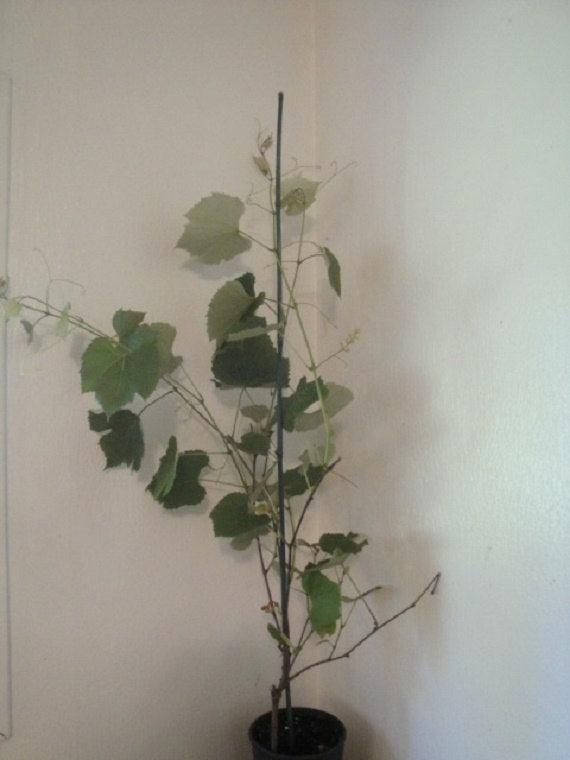
The last photo is an example of a #1 (1 gallon) Flame Grape, however, it is not the exact plant that you will receive. Your plant will be approximately 1-2 years old and 2'-3' tall.
Pollination and Ripening
Pollination and Ripening
The Flame is self-pollinating, meaning that they do not require another grape vine for pollination. However, planting multiple vines can enhance fruit production.
Shipping Restrictions
Shipping Restrictions
Cannot ship to CA., HI., ID., NY., OR., WA
Planting Guide
Planting Guide
Grape Planting Guide
Site Selection:
Choose a sunny location with well-drained soil for planting grapes. Good air circulation is essential to prevent diseases. Grapes prefer slightly
alkaline to neutral soil.
Time of Year to Plant:
Grapes can be planted year round in cooler climates. In hotter climates, grapes can be planted from fall or through late spring. This allows them to establish roots before the growing season.
Spacing:
Space grapevines 6 to 10 feet apart in rows that are 8 to 12 feet apart. This ensures good air circulation and access to sunlight.
Soil Type:
Grapes prefer well-drained soil with a pH between 6.0 and 6.5. Sandy loam or loamy soil is ideal. Amend heavy clay soil with organic matter.
Planting:
1. Dig a hole large enough to accommodate the root system.
2. Place the grapevine in the hole, ensuring the root crown is just above the soil surface.
3. Backfil with soil and water thoroughly after planting.
Watering:
Keep the soil consistently moist, especially during the first year. Water deeply and regularly, but avoid waterlogged conditions.
Fertilizing:
Apply a balanced fertilizer in spring before new growth begins. Follow package instructions and consider soil test recommendations.
Pruning:
Prune grapevines in late winter or early spring. Remove dead or weak wood and train the vines to a trellis system for optimal sunlight exposure.
Pollination:
Grapes are self-pollinating, meaning they don't require a separate pollinator.
Acid Levels:
Grapes prefer slightly acidic to neutral soil. Test soil pH and adjust using lime or sulfur if necessary.
Care Through the Seasons:
Spring: Prune, apply fertilizer, and monitor for pests and diseases.
Summer: Water consistently, thin out excessive growth, and protect grapes from birds with netting
Fall: Harvest ripe grapes, remove leaves around the fruit zone, and consider applying compost.
Preparing to Plant:
1. Test soil pH and amend as necessary.
2. Install trellis systems before planting to support vine growth.
3. Clear the planting area of weeds and debris.
4. Consider wind direction when choosing the planting site to avoid damage to vines.
Managing Pests and Diseases:
1. Inspect vines regularly for pests like aphids, spider mites, and grape leafhoppers.
2.Apply insecticidal soap or neem oil for minor infestations.
3. Control fungal diseases with fungicides and practice good air circulation.
Keeping Grape Vines Healthy:
1. Mulch to retain moisture, suppress weeds, and regulate soil temperature.
2. Prune regularly to promote air circulation and sunlight exposure.
3. Control vine growth to prevent shading and improve grape quality.
Harvest and Storage:
1. Harvest grapes when they are fully ripe and have reached the desired sweetness.
2. Table grapes can be eaten fresh, while wine grapes can be processed for winemaking.
3. Store grapes in a cool, humid place or refrigerate for short-term storage.
Types of Grapes:
Table Grapes: Varieties like Canadice, Vanessa, Lakemont and Suffolk Red.
Wine Grapes: Varieties such as Pinot Gris, Einset and Golden Muscat.
Juice Grapes: Varieties like Concord or Niagara for making grape juice
Choosing Plants:
Select grape varieties based on your climate, intended use (table grapes, wine, or juice), and disease resistance. Consult local agricultural extension services for suitable varieties that will do well in your area.
Chill Hours
Chill Hours
Flame Seedless grapes require low chill hours, generally 100–400 hours. This variety performs best in mild winter climates.
Share