-
Larger, Healthier Plants
More Value for Your Garden -
Nationwide Free Delivery
Fresh Plants to Your Doorstep -
Easy Online Shopping
Your Dream Garden in a Few Clicks


Honeycrisp Apple Tree
Honeycrisp Apple Tree
Couldn't load pickup availability
USDA Zones/Minimum Temperature
USDA Zones/Minimum Temperature
USDA zone: 3-9. Minimum temperature: Hardy to -20f to -30f.
- Every Order Ships Free
- Use code SAVE10% on orders over $50
- Guaranteed to Arrive Alive.
Honeycrisp
The Honeycrisp is a superior, large red apple with yellow/green undertones and white flesh. It is very sweet and juicy with a crisp texture. It has become a favorite for the home grower. It is an excellent choice for fresh eating, baking and cider. It was developed at the University of Minnesota. The Honeycrisp is scab and fireblight resistant and cold hardy, down to -30f. It does well in a wide range of climates. It will ripen in early to mid September and will need another apple nearby to pollinate it. Most other apple varieties will pollinate it. The Honeycrisp will store very well when stored in cool, dry conditions, up to 5-7 months. Apples need full sun and well drained soil.
Height: It is a semi-dwarf growing to 8’-12’, but can be kept smaller with some pruning.
Minimum temperature: Hardy to -20f to -30f.
USDA zone: 3-9.
Light: Full sun.
Fruit: Large red with yellow/green undertones and white flesh.
Bearing age: 3-5 years.
Pollination requirements: It needs another apple nearby.
Ripens: Sept.
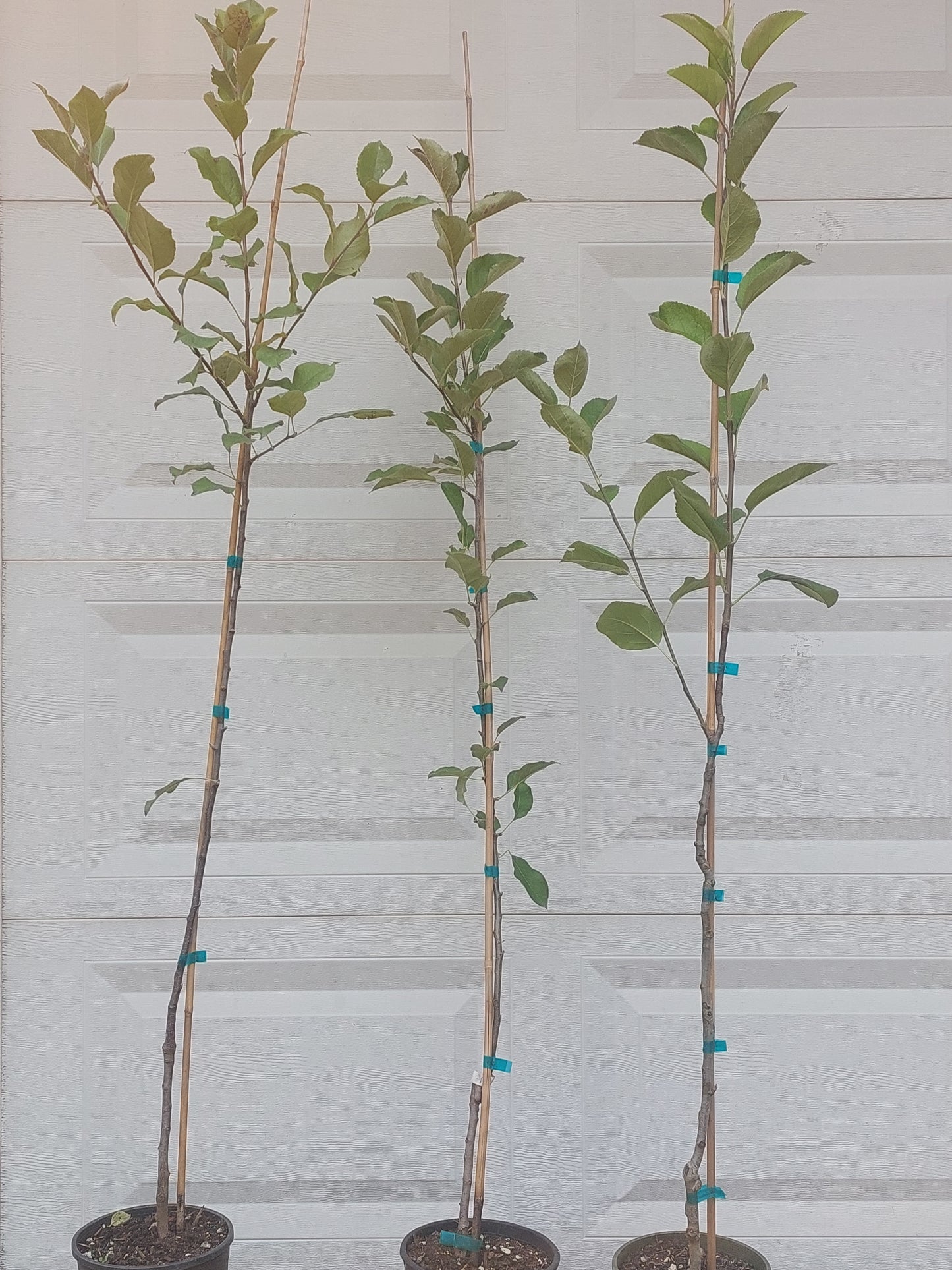
The last photo is an example of a #1 (1 gallon) Honeycrisp apple, however, it is not the exact plant that you will receive. Your plant will be approximately 2-3 years old and 3’-4' tall.
Plant Highlight
Plant Highlight
Height: It is a semi-dwarf growing to 8’-12’, but can be kept smaller with some pruning.
Minimum temperature: Hardy to -20f to -30f.
USDA zone: 3-9.
Light: Full sun.
Fruit: Large red with yellow/green undertones and white flesh.
Bearing age: 3-5 years.
Pollination requirements: It needs another apple nearby.
Ripens: Sept.
Pollination and Ripening
Pollination and Ripening
Most apple varieties are not self-pollinating. Plant at least two different apple trees for cross-pollination, ensuring they bloom simultaneously. Alternatively, consider self-pollinating cultivars.
Shipping Restrictions
Shipping Restrictions
Can not ship to CA or HI.
Planting Guide
Planting Guide
Planting Guide for Apples
Plant Description: Apples (Malus domestica) are deciduous fruit-bearing trees known for their crisp, sweet or tart fruits. They come in various cultivars, offering a wide range of flavors, colors, and textures. The trees are characterized by their oval-shaped leaves, fragrant blossoms, and often have a spreading canopy.
Size and Height of Plant: Apple trees can vary in size depending on the rootstock used. Dwarf trees typically reach 6-10 feet in height, semi-dwarf trees reach 12-18 feet, and standard trees can grow up to 25 feet. Consider the available space and desired tree size when selecting a cultivar.
Fruit Description: Apples come in different colors such as red, green, or yellow, and their taste can range from sweet to tart. Ripening times vary by cultivar, generally falling between late summer and late fall. It's crucial to know the specific ripening time of the chosen variety.
Bearing Age: Most apple trees begin bearing fruit at 2 to 4 years after planting. However, the full fruit production capacity may take a few more years.
Site Selection: Choose a planting site with full sun exposure for at least 6-8 hours a day. Ensure good air circulation to reduce the risk of diseases. Planting on a slope helps prevent late spring frosts that can damage blossoms.
Soil: Apples prefer well-draining soil with a slightly acidic to slightly alkaline pH ranging from 6.0 to 7.0. Sandy loam or loamy soils are ideal. Perform a soil test to determine nutrient levels and make necessary amendments.
Pest and Diseases: Common pests include aphids, codling moths, and apple maggots. Diseases like apple scab and powdery mildew can also affect apple trees. Implement a pest management plan and consider disease-resistant apple varieties. Regularly inspect the trees for early detection.
Spacing: Plant apple trees at least 15-20 feet apart to allow for proper air circulation and future growth. Dwarf and semi-dwarf trees can be planted closer, while standard trees require more space.
Planting: In cold areas, plant apple trees late winter to early spring. In mild areas, you can plant year round. Dig a hole twice as wide as the root ball. Keep the graft union 2”-3” above the soil line. The union is a knob down low on the tree where the apple was grafted to the root stock. It can be as much as 12” up the tree. Water the tree thoroughly after planting.
Watering: Provide consistent moisture, especially during dry periods. Water deeply to encourage deep root growth. Mulching around the base helps retain soil moisture.
Fertilizer: Apply a balanced fertilizer in early spring before new growth begins. Consider organic options such as compost or well-rotted manure. Follow recommended rates based on soil test results.
Pollination: Most apple varieties are not self-pollinating. Plant at least two different apple trees for cross-pollination, ensuring they bloom simultaneously. Alternatively, consider self-pollinating cultivars.
Harvest and Storage: Harvest apples when they are mature but still firm. Late-maturing varieties are typically harvested in fall. Store apples in a cool, humid place. Some varieties can be stored for months.
Care by Season:
- Spring: Prune for shape, remove dead wood, and apply dormant oil spray.
- Summer: Thin fruits to avoid overcrowding and enhance fruit size.
- Fall: Harvest mature apples, continue pest and disease monitoring.
- Winter: Apply a winter mulch to protect roots from freezing temperatures.
USDA Hardiness Zone: Apples grow well in USDA hardiness zones 3-8. Select cultivars suited to your specific climate.
Remember to tailor these guidelines based on your specific apple variety and local climate conditions for optimal results.
Chill Hours
Chill Hours
Share