-
Larger, Healthier Plants
More Value for Your Garden -
Nationwide Free Delivery
Fresh Plants to Your Doorstep -
Easy Online Shopping
Your Dream Garden in a Few Clicks


Patriot Blueberry
Patriot Blueberry
Couldn't load pickup availability
USDA Zones/Minimum Temperature
USDA Zones/Minimum Temperature
This variety is hardy in USDA zones 3 to 8, making it suitable for regions with colder winters. It can withstand temperatures as low as -35°F (-29°C), making it one of the most cold-tolerant blueberry varieties available that is able to thrive in regions with harsh winters.
- Every Order Ships Free
- Use code SAVE10% on orders over $50
- Guaranteed to Arrive Alive.
Vaccinium corymbosum 'Patriot'
Blueberries are well-shaped, upright and vigorous plants with dark green foliage. In addition to the berries, blueberries are beautiful ornamental, native shrubs with spring flowers and fall color. They can be included in the landscape as either a single planting, hedge/border or in areas such as native gardens and woodlands. They also make nice container plants for a patio or deck. Blueberry plants are very hardy and long-lived. They prefer organically rich, medium to wet, well-drained acidic soils in full sun to part shade.
Vaccinium corymbosum 'Patriot'
The ‘Patriot’ blueberry has medium to large, sweet, dark blue berries that ripen early summer, usually in June. There is an abundance of berries, up to 20 pounds per bush once mature.It typically grows to 4-6’ tall and wide. It is very cold hardy, to a USDA zone 3, to -35f to -40f. It has yellow, orange and red fall colors.
Minimum temperature: Hardy to -45f.
USDA zone: 3-7.
Light: Full to part sun.
Fruit: Medium to large, sweet, vibrant blue.
Bearing age: 2-3 years.
Pollination requirements: It is self pollinating but does better with another blueberry nearby.
Ripens: July.
Cannot ship to GA., HI., MI., OR., WA.
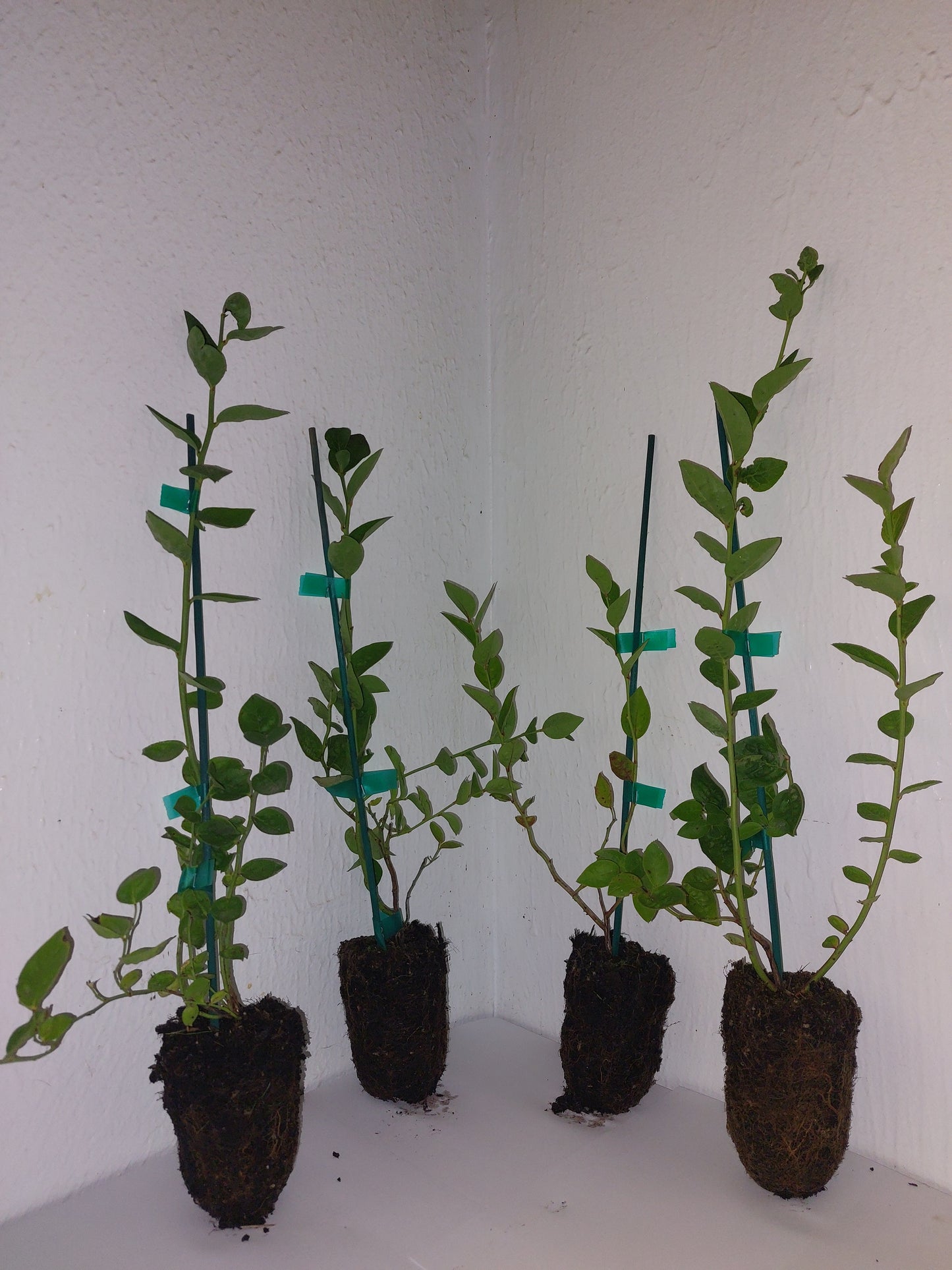
The last photo is an example of 4” "Patriot" blueberries, however, they are not the exact plants that you will receive.
The plant(s) that you are purchasing are grown in individual 4" x 2" containers, which are removed and your plants are shrink wrapped in plastic for shipping purposes. Plants shipped during the growing season will be approximately 1 year old and 8"-14" tall.
Plant Highlight
Plant Highlight
Minimum temperature: Hardy to -45f.
USDA zone: 3-8.
Light: Full to part sun.
Fruit: Medium to large, sweet, vibrant blue
Bearing age: 2-3 years.
Pollination requirements: It is self pollinating but does better with another blueberry nearby.
Ripens: July8
Pollination and Ripening
Pollination and Ripening
Although Patriot Blueberries are self-pollinating, planting multiple varieties can improve berry size and overall yield. Cross-pollination with other blueberry varieties will enhance fruit production. It begins to bear fruit in 2 to 3 years after planting, typically ripening early to mid-season. The berries are ready for harvest around late June to July.
Shipping Restrictions
Shipping Restrictions
Cannot ship to GA., HI., MI., OR., WA.
Planting Guide
Planting Guide
Planting Guide for Blueberries
Plant Description:
Blueberries (Vaccinium spp.) are deciduous shrubs belonging to the Ericaceae family. They are known for their delicious and nutritious berries, which are typically small, round, and vary in color from blue to purple-black, depending on the variety. Blueberry bushes feature ovate leaves that turn vibrant shades of red and yellow in the fall.
Size and Height of Plant:
Blueberry bushes come in various sizes, ranging from compact varieties around 2 feet tall to larger bushes that can reach heights of 6 feet or more.
Fruit Description:
Blueberries produce clusters of small, round berries with a sweet and tangy flavor. The time of ripening depends on the variety, with some ripening in early summer and others in late summer to early fall.
Bearing Age:
Blueberry bushes typically start bearing fruit in their second or third year after planting. The yield increases as the plant matures, reaching full production around the fourth year.
USDA Hardiness Zone:
Blueberries are hardy in USDA Zones 3-7, but specific varieties may have different zone requirements.
Site Selection:
Choose a planting site with full sun exposure for optimal fruit production. Blueberries prefer well-drained soil and slightly acidic conditions (pH 4.5-5.5). Ensure good air circulation to reduce the risk of diseases.
Soil:
Blueberries thrive in acidic, well-draining soil. Amend the soil with organic matter like peat moss or compost to improve fertility and drainage.
Pest and Diseases:
Common pests include birds, aphids, and spider mites. Diseases like powdery mildew and mummy berry can also affect blueberries. Use bird netting to protect fruit, and employ organic or chemical controls as needed.
Spacing:
Plant blueberries 4 to 6 feet apart to allow for proper air circulation and future growth. Rows should be spaced 8 to 10 feet apart.
Planting:
Plant blueberries in early spring or late fall when the soil is workable. Dig a hole twice the size of the root ball, and place the plant at the same depth it was in the container. Backfill with amended soil, water thoroughly, and apply a layer of mulch around the base.
Watering:
Blueberries require consistent moisture. Keep the soil evenly moist, especially during dry periods. Mulching helps retain soil moisture and prevents weed competition.
Fertilizer (Organic or Inorganic):
Fertilize blueberries in early spring with a balanced, slow-release fertilizer. Use an acidic fertilizer specifically formulated for blueberries. Organic options include well-rotted compost, pine needle mulch, or coffee grounds.
Pollination:
Blueberries are self-pollinating, but planting more than one variety can improve fruit set. Bees and other pollinators also contribute to successful pollination.
Harvest and Storage:
Harvest blueberries when they are fully ripe and easily detach from the stem. The timing varies by variety. Store fresh blueberries in the refrigerator for up to two weeks. Consider freezing for longer storage.
Care by Season:
Spring: Prune dead or damaged branches and apply fertilizer.
Summer: Monitor for pests and diseases; provide adequate water.
Fall: Mulch to protect roots from temperature extremes.
Winter: Consider covering bushes with burlap in colder climates.
Chill Hours
Chill Hours
Patriot blueberries require high chill hours, typically 800–1,000 hours. Proper chilling encourages strong spring growth and dependable fruit production.
Share