-
Larger, Healthier Plants
More Value for Your Garden -
Nationwide Free Delivery
Fresh Plants to Your Doorstep -
Easy Online Shopping
Your Dream Garden in a Few Clicks


Actinidia Arguta Female Hardy Kiwi
Actinidia Arguta Female Hardy Kiwi
Couldn't load pickup availability
USDA Zones/Minimum Temperature
USDA Zones/Minimum Temperature
The hardy kiwi does well in USDA hardiness zones 4 to 8, making them suitable for a wide range of climates, including both temperate and cooler regions. It can tolerate temperatures as low as -25°F to -30°F (-31°C to -34°C). However, late spring frosts can damage young buds and flowers, potentially reducing fruit production. Providing some frost protection during early growth can help ensure a healthy yield.
- Every Order Ships Free
- Use code SAVE10% on orders over $50
- Guaranteed to Arrive Alive.
The Actinidia Arguta, commonly known as the Female Hardy Kiwi, is a vigorous and resilient fruit-bearing vine that adds a unique and delicious touch to your garden. Unlike its larger cousin, the traditional kiwi (Actinidia deliciosa), this variety is more compact and better suited for smaller spaces.
The Female Hardy Kiwi typically reaches a height of 10 to 20 feet, showcasing its climbing nature. Its twining branches create a lush, green canopy that adds a touch of elegance to any landscape.
These hardy kiwi vines thrive in USDA hardiness zones 4 to 9, making them suitable for a wide range of climates, including both temperate and cooler regions.
The fruit produced by the Female Hardy Kiwi is small, smooth-skinned, and typically green. Known for its sweet and tangy flavor, the kiwi is packed with vitamin C and other essential nutrients.
These kiwi vines require a male pollinator for fruit production. Ensure there's a male Actinidia Arguta plant nearby for effective pollination.
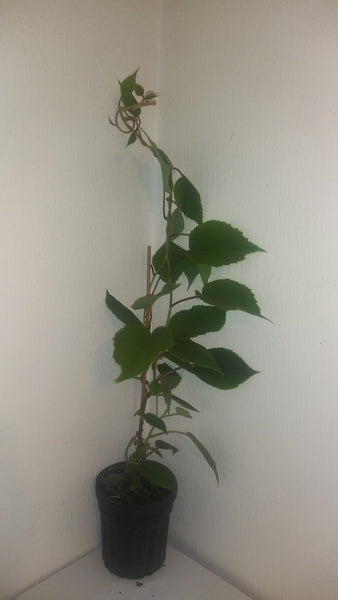
The last photo is an example of a #1 (1 gallon), Actinidia Arguta Hardy Female Kiwi, however, it is not the exact plant that you will receive. Your plant will be approximately 1-2 years old and 1'-2' tall.
Plant Highlight
Plant Highlight
Height: 10'-20'.
Minimum temperature: -30°F to -20°F (-34.4°C to -28.9°C).
USDA zone: 4-9.
Light: Full sun to part shade.
Bearing age: 2-3 years.
Pollination requirements: Needs a male kiwi for pollination.
Ripens: Late summer to early fall.
Pollination and Ripening
Pollination and Ripening
Kiwi plants are dioecious, meaning they have separate male and female plants. To ensure fruit production, it's essential to have both male and\n female vines. Typically, one Actinidia Arguta Male plant can pollinate multiple female plants. The fruits ripen in late summer to early fall, Bearing age usually begins around the third year after planting, ensuring a bountiful harvest once the vine matures.
Shipping Restrictions
Shipping Restrictions
Can not ship to HI.
Planting Guide
Planting Guide
Kiwi Planting And Care
Time of Ripening and Bearing Age:
Kiwi typically begins bearing fruit around 2-3 years after planting. The time of ripening occurs in summer to early fall, providing a bountiful harvest during this period.
Site Selection:
Select a planting site that receives full sun exposure to promote optimal fruit development. Ensure that the site has well-draining soil to prevent waterlogged conditions, as kiwi plants are sensitive to overly saturated roots.
Soil Type:
Kiwi prefers slightly acidic to neutral soil with a pH range of 5.5 to 7.5. Rich, loamy soil that is well-draining is ideal for promoting healthy root development.
Planting Instructions:
Plant kiwi vines in the spring through summer in colder regions, year round in warmer regions, in order to allow them to establish themselves before winter. Dig a hole twice as wide and deep as the root ball, and set the plant at the same depth it was in the container. Water thoroughly after planting.
Spacing:
Provide ample spacing between Kiwi plants, allowing for a distance of 10-12 feet between each vine to accommodate their expansive growth.
Watering:
Maintain consistent soil moisture, especially during dry periods. Water deeply but avoid waterlogged conditions. Mulching around the base helps retain moisture and suppress weeds.
Types of Fertilizer to Use:
Apply a balanced, slow-release fertilizer in early spring before new growth begins. Additionally, provide a side dressing of compost or well-rotted manure during the growing season.
Pollination:
Kiwi plants are dioecious, meaning they have separate male and female plants. To ensure proper pollination, it is advisable to plant at least one male kiwi vine for every 4-5 female vines.
Pest and Diseases:
- Common pests include aphids, scale insects, and spider mites. Regular inspection and insecticidal soap applications can help control these pests.
- Kiwi plants may be susceptible to fungal diseases like powdery mildew and bacterial canker. Fungicidal sprays and proper pruning to improve air circulation can mitigate these issues.
Chill Hours
Chill Hours
Female hardy kiwi requires moderate chill hours, typically around 700–1000 hours. This cold-hardy species benefits from sufficient winter chilling to produce vigorous vines and reliable crops of smooth-skinned fruit.
Share