-
Larger, Healthier Plants
More Value for Your Garden -
Nationwide Free Delivery
Fresh Plants to Your Doorstep -
Easy Online Shopping
Your Dream Garden in a Few Clicks


Actinidia Deliciosa 'Vincent' Female Kiwi
Actinidia Deliciosa 'Vincent' Female Kiwi
Couldn't load pickup availability
USDA Zones/Minimum Temperature
USDA Zones/Minimum Temperature
The Vincent Kiwi can tolerate temperatures down to 0° to 10° F (-17.8° to -12.2° C). It thrives best in USDA zones 7-9, where winters are mild. In colder regions, providing winter protection such as mulching around the base and covering young vines during frosts can help prevent cold damage.
- Every Order Ships Free
- Use code SAVE10% on orders over $50
- Guaranteed to Arrive Alive.
The Vincent Kiwi (Actinidia deliciosa 'Vincent') is a captivating and fruitful addition to any garden, boasting a plethora of appealing features. This deciduous vine, renowned for its vigorous growth and delectable fruits, is a delightful choice for both novice and seasoned gardeners. The plant exhibits a robust and sprawling habit, reaching to 15 to 20 feet or more, making it an ideal choice for trellises, arbors, or pergolas.
The fruits of Vincent Kiwi are medium to large in size, with a brown, fuzzy exterior and vibrant green, juicy flesh. Known for their sweet and tangy flavor, these kiwis are rich in vitamin C and make for a delightful addition to salads, desserts, or enjoyed on their own.
It is not self-pollinating, so it's essential to plant at least one male vine for every four to eight female vines to ensure proper pollination and fruit set.
The Vincent is well-suited for USDA hardiness zones 7 to 11, thriving in moderately temperate climates with mild winters and warm summers.
Incorporating Vincent Kiwi into your garden can be a rewarding experience, providing not only a visually appealing landscape but also a delicious and nutritious harvest
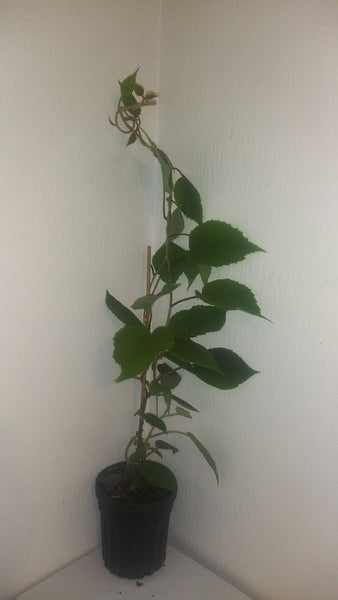
The plant(s) that you are purchasing are grown in individual size containers, which are removed and your plant(s) are shrink wrapped in plastic for shipping purposes. Your plant(s) will be approximately 1-2 years old and 1’-2'tall.
Plants shipped late Fall to early Spring may be pruned back and with out foliage.
Plant Highlight
Plant Highlight
Height: 15'-20'.
Minimum temperature: 0° to 10° F (-17.8° to -12.2° C).
USDA zone: 7-9.
Light: Full sun to part shade.
Bearing age: 2-3 years.
Pollination requirements: Needs a male kiwi for pollination.
Ripens: Late fall.
Pollination and Ripening
Pollination and Ripening
The Vincent Kiwi is not self-pollinating. It needs at least one male vine to ensure proper pollination and fruit set. The Vincent typically ripens in late autumn, usually around October or early November, depending on the climate and specific growing conditions. It's considered a good choice for warmer climates and is best harvested when the fruit reaches full size and is slightly soft to the touch.
Shipping Restrictions
Shipping Restrictions
Can not ship to HI.
Planting Guide
Planting Guide
Kiwi Planting And Care
Time of Ripening and Bearing Age:
Kiwi typically begins bearing fruit around 2-3 years after planting. The time of ripening occurs in summer to early fall, providing a bountiful harvest during this period.
Site Selection:
Select a planting site that receives full sun exposure to promote optimal fruit development. Ensure that the site has well-draining soil to prevent waterlogged conditions, as kiwi plants are sensitive to overly saturated roots.
Soil Type:
Kiwi prefers slightly acidic to neutral soil with a pH range of 5.5 to 7.5. Rich, loamy soil that is well-draining is ideal for promoting healthy root development.
Planting Instructions:
Plant kiwi vines in the spring through summer in colder regions, year round in warmer regions, in order to allow them to establish themselves before winter. Dig a hole twice as wide and deep as the root ball, and set the plant at the same depth it was in the container. Water thoroughly after planting.
Spacing:
Provide ample spacing between Kiwi plants, allowing for a distance of 10-12 feet between each vine to accommodate their expansive growth.
Watering:
Maintain consistent soil moisture, especially during dry periods. Water deeply but avoid waterlogged conditions. Mulching around the base helps retain moisture and suppress weeds.
Types of Fertilizer to Use:
Apply a balanced, slow-release fertilizer in early spring before new growth begins. Additionally, provide a side dressing of compost or well-rotted manure during the growing season.
Pollination:
Kiwi plants are dioecious, meaning they have separate male and female plants. To ensure proper pollination, it is advisable to plant at least one male kiwi vine for every 4-5 female vines.
Pest and Diseases:
- Common pests include aphids, scale insects, and spider mites. Regular inspection and insecticidal soap applications can help control these pests.
- Kiwi plants may be susceptible to fungal diseases like powdery mildew and bacterial canker. Fungicidal sprays and proper pruning to improve air circulation can mitigate these issues.
Chill Hours
Chill Hours
Vincent kiwi requires moderate chill hours, generally around 600–800 hours. This variety benefits from adequate winter chilling to ensure strong flowering and consistent fruit set.
Share