-
Larger, Healthier Plants
More Value for Your Garden -
Nationwide Free Delivery
Fresh Plants to Your Doorstep -
Easy Online Shopping
Your Dream Garden in a Few Clicks


Columbia Giant Thornless Blackberry
Columbia Giant Thornless Blackberry
Couldn't load pickup availability
USDA Zones/Minimum Temperature
USDA Zones/Minimum Temperature
Columbia Giant Thornless Blackberry thrives in USDA hardiness zones 5 to 9, making it adaptable to a wide range of climates and regions. Hardy to -10ºf to -20ºf.
- Every Order Ships Free
- Use code SAVE10% on orders over $50
- Guaranteed to Arrive Alive.
'Columbia Giant' Thornless Blackberry
The ‘Columbia Giant’ is perhaps one of the largest blackberries on the market. Its berries are firm, conical shape with a sweet, tart flavor. They usually will ripen from June to July. It is a thornless, trailing vine, making it easy to harvest the fruit. It is very heat and disease resistant. It will grow to 5’-6’.
Height: 5'-6', but can be kept smaller with some pruning.
Minimum temperature: Hardy to -10ºf to -20ºf.
USDA zone: 5-8.
Light: Full sun to part sun.
Bearing age: 1-2 years. 10-15 lbs per plant.
Growth Habit: Trailing floricanes.
Cane Type: Thornless.
Water/soil: Average to fertile, moist, well drained soil
Pollination requirements: None. It is self fertile but will do better with another type nearby.
Ripens: Mid summer through September.
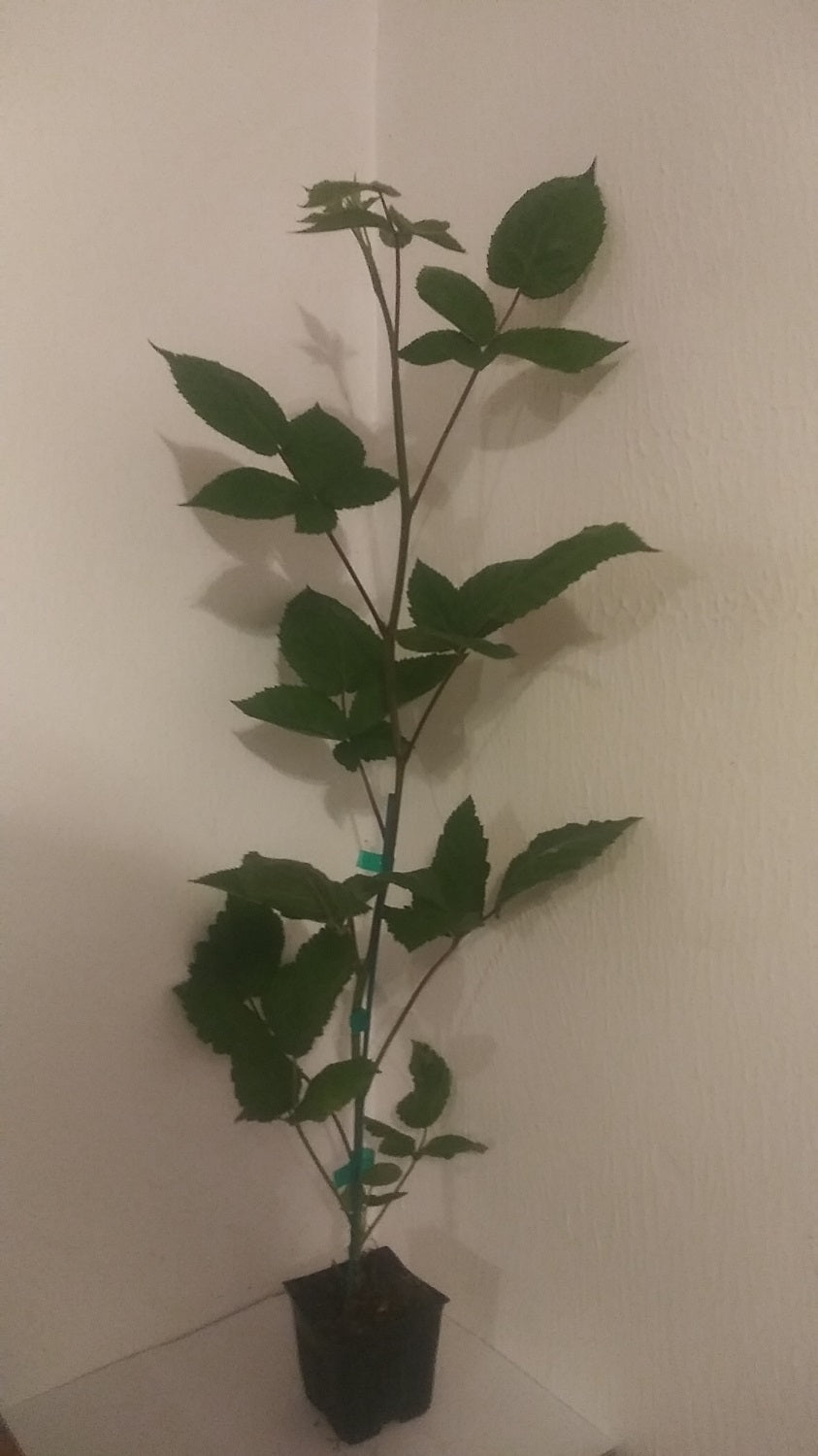
The last photo is an example of a potted 4" size container of a Columbia Giant blackberry, however, it is not the exact plant that you will receive. They are approximately 1-2 years old and 1’-2’ tall. The container(s) are/is removed and your plant(s) are/is shrink wrapped in plastic for shipping purposes.
Plant Highlight
Plant Highlight
Height:5'-6', but can be kept smaller with some pruning.
Minimum temperature: Hardy to -10ºf to -20ºf.
USDA zone: 5-8.
Light: Full sun to part sun.
Bearing age: 1-2 years. 10-15 lbs per plant.
Growth Habit: Trailing floricanes.
Cane Type: Thornless.
Water/soil: Average to fertile, moist, well drained soil.
Pollination requirements: None. It is self fertile but will do better with another type nearby.
Ripens: Mid summer through September.
Pollination and Ripening
Pollination and Ripening
Most blackberries are self-pollinating, but planting multiple bushes can enhance yields. Bees and other pollinators also contribute to successful pollination. The Columbia Giant typically ripens in mid to late summer, offering a prolonged harvest season. Bearing age usually begins in the second year after planting, providing a relatively quick return on investment for gardeners.Most blackberries are self-pollinating, but planting multiple bushes can enhance yields. Bees and other pollinators also contribute to successful pollination.The Columbia Giant typically ripens in mid to late summer, offering a prolonged harvest season. Bearing age usually begins in the second year after planting, providing a relatively quick return on investment for gardeners.
Shipping Restrictions
Shipping Restrictions
Cannot ship to HI..
Planting Guide
Planting Guide
Blackberry Planting Guide
Plant Description:
Blackberries are deciduous shrubs belonging to the Rubus genus, known for their delicious and nutritious berries. They typically have thorny or thornless canes, with compound leaves and white to pale pink flowers. The berries are aggregates of drupelets, forming acluster known as a "drupelet."
Size and Height of Plant:
Blackberry plants can reach varying sizes depending on the variety. On average, they grow between 3 to 6 feet in height, with a spread of 2 to 3 feet. Thornless varieties are preferred for ease of maintenance.
Fruit and Time of Ripening:
Blackberries produce juicy, dark purple to black berries. The time of ripening varies by variety but generally falls between mid-summer to early fall. Early varieties may ripen as early as June, while late season varieties may extend into September.
Bearing Age:
Blackberry plants typically start bearing fruit in their second year. By the third year, they reach full production potential.
Site Selection:
Choose a planting site with full sun exposure for at least 6-8 hours a day. Ensure good air circulation to prevent diseases. Well-drained soil is essential to avoid waterlogged roots.
Soil:
Blackberries thrive in well-draining, slightly acidic to neutral soil with a pH between 5.5 and 7.0. Amending the soil with organic matter like compost improves fertility.
Pest and Diseases:
Common pests include aphids, spider mites, and Japanese beetles. Diseases such as rust, powdery mildew, and cane blight may occur. Regular inspection and appropriate pesticides or fungicides can help manage these issues.
Spacing:
Plant blackberries 3 to 4 feet apart in rows, with rows spaced 6 to 8 feet apart. This provides adequate space for air circulation and easy harvesting.
Planting:
Plant blackberries in late fall or early spring when the soil is workable. Dig a hole deep enough to accommodate the roots, and set the plant at the same depth as it was in the nursery container. Water thoroughly after planting.
Watering:
Keep the soil consistently moist, especially during dry periods. Provide 1 to 2 inches of water per week. Mulching around the plants helps retain moisture and suppress weeds.
Fertilizer (Organic or Inorganic):
Incorporate a balanced fertilizer into the soil during planting and then annually in early spring. Organic options include well-rotted compost or manure. Inorganic fertilizers with an N-P-K ratio of 10-10-10 are suitable.
Pollination:
Most blackberry varieties are self-pollinating, meaning they do not require another plant for pollination. However, planting multiple varieties can improve yields.
Harvest and Storage:
Harvest blackberries when they are fully colored and easily come off the plant with a slight tug. Use them immediately or store them in the refrigerator for up to a week. Consider freezing for longer storage.
Care by Season:
Spring: Prune out dead or damaged canes. Apply fertilizer.
Summer: Water regularly. Monitor for pests and diseases.
Fall: Continue watering until the ground freezes. Mulch around plants for winter protection.
USDA Hardiness Zone:
Blackberries are hardy in USDA zones 5-10. Choose varieties that are well-suited to your specific zone for optimal growth and fruit production.
Chill Hours
Chill Hours
Columbia Giant blackberries require moderate chill hours, generally 400–800 hours. Proper winter chilling supports large berries and vigorous canes.
Share