-
Larger, Healthier Plants
More Value for Your Garden -
Nationwide Free Delivery
Fresh Plants to Your Doorstep -
Easy Online Shopping
Your Dream Garden in a Few Clicks


LSU Purple Fig
LSU Purple Fig
Couldn't load pickup availability
USDA Zones/Minimum Temperature
USDA Zones/Minimum Temperature
It is hardy from USDA hardiness zones 7 through 11, making it well-suited for a variety of climates with mild winters. Hardy to 0ºf to 5ºf.
- Every Order Ships Free
- Use code SAVE10% on orders over $50
- Guaranteed to Arrive Alive.
The LSU Purple Fig (Ficus carica 'LSU Purple') is a captivating deciduous fruit tree renowned for its striking dark purple to black-skinned fruit. This variety is known for its ornamental value as well as its delicious, sweet taste.
Its fruit is medium to large in size, with a rich, dark purple to almost black exterior. The interior flesh is a vibrant red, offering a sweet and flavorful taste. The fruit is perfect for fresh consumption, and it can also be used in jams, preserves, and desserts.
The LSU Purple typically grows to a height of 8 to 15 feet, forming an attractive, spreading canopy. The size can be managed through pruning, making it suitable for both gardens and container cultivation. It ripens in late summer to early fall. The bearing age for this cultivar is usually 1 to 2 years after planting, providing a relatively quick return on investment for growers.
This fig cultivar thrives in USDA hardiness zones 7 through 11, making it well-suited for a variety of climates with mild winters.
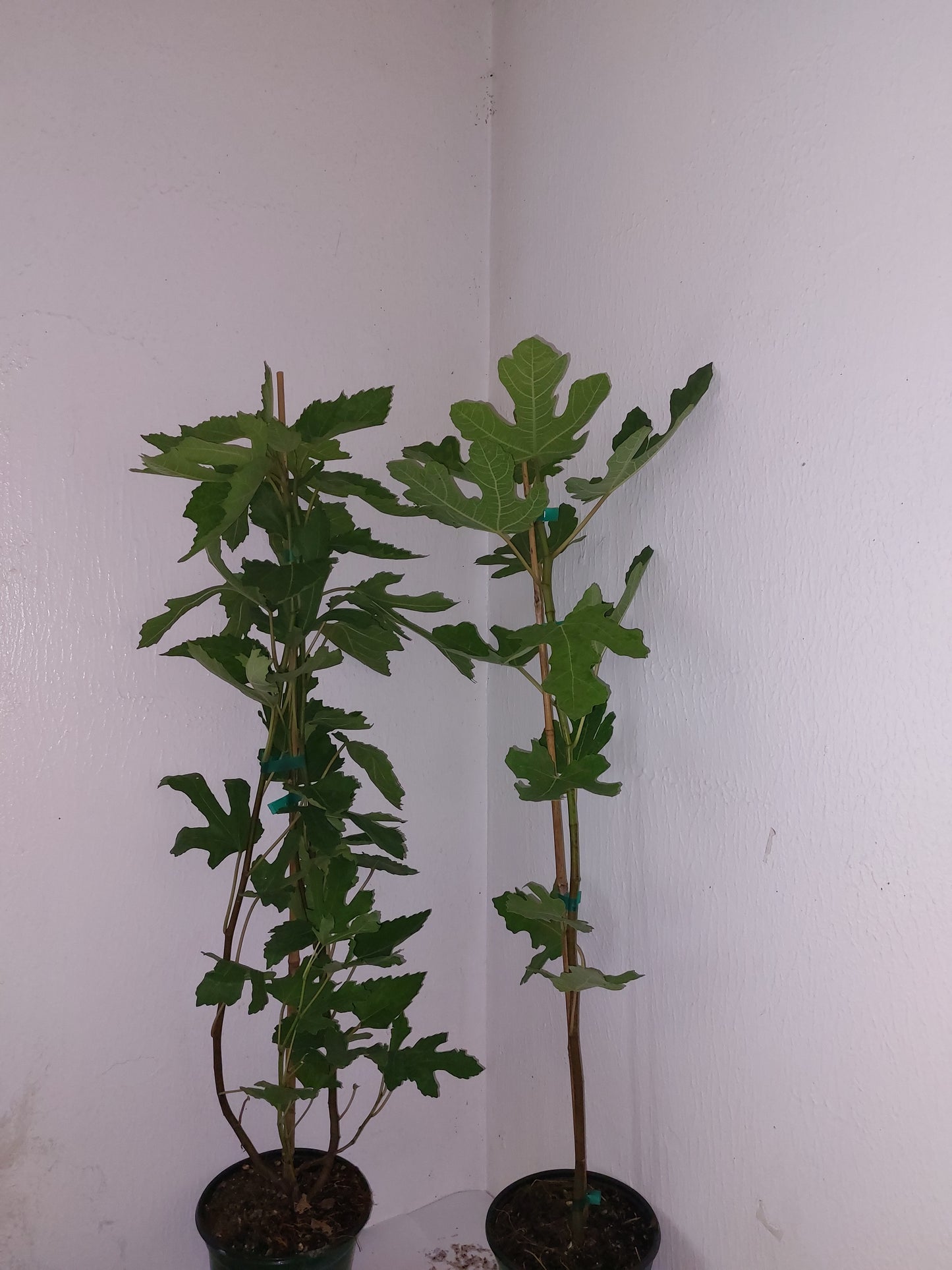
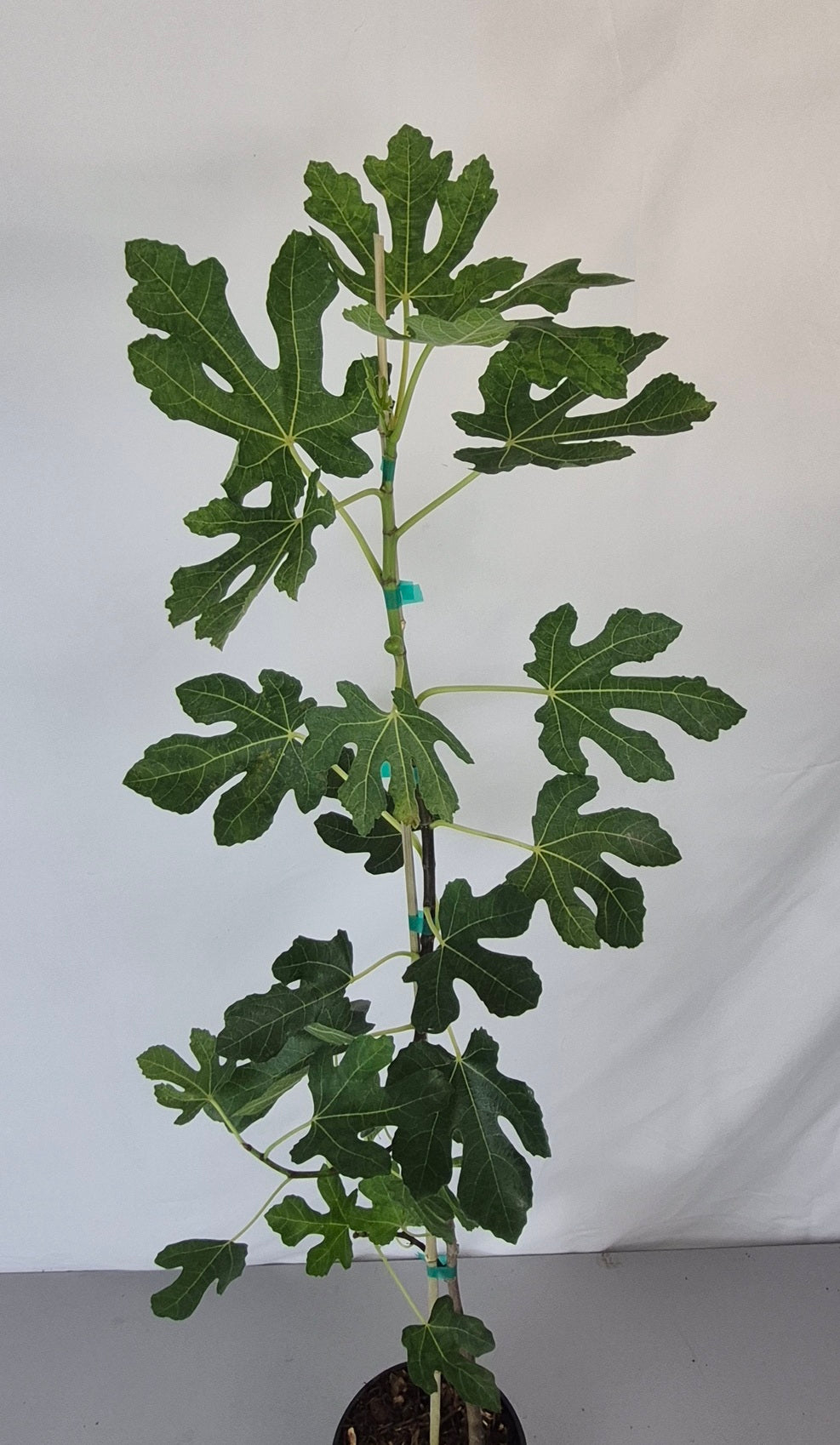
Fig Mosaic Virus (FMV) is common in cultivated fig trees, including ours, and may cause yellow or mottled patterns on the leaves, especially in young or container-grown trees. It is generally considered a cosmetic issue and typically does not prevent figs from growing or producing fruit. Symptoms often become less noticeable as the tree matures and becomes established in the ground.
The last photo is an example of a 1 quart LSU Fig, however, it is not the exact plant that you will receive. Your plant will be approximately 1-2 years old and 2'-4' tall. Figs can be single trunk to multi-trunked trees.
Plant Highlight
Plant Highlight
Height: 8'-15', but can be kept smaller with some pruning.
Minimum temperature: Hardy to 0ºf to 5ºf.
USDA zone: 7-11.
Light: Full sun to part sun.
Bearing age: 1-2 years. 10-15 lbs per plant.
Ripens: Late summer.
Pollination and Ripening
Pollination and Ripening
While LSU Purple Figs are self-pollinating, providing pollinators like bees can enhance fruit production. However, cross-pollination is not necessary for a bountiful harvest. It typically ripens in late summer to early fall. The bearing age for this cultivar is usually 1 to 2 years after planting, providing a relatively quick return on investment for growers.
Shipping Restrictions
Shipping Restrictions
Cannot ship to HI.
Planting Guide
Planting Guide
Fig Planting Guide:
Plant Description:
Figs (Ficus carica) are deciduous trees or shrubs with large, lobed leaves. They are known for their unique, sweet, and juicy fruits. Figs have a spreading habit and can be grown as both trees and bushes. There are various cultivars, each with its own distinct flavor and size.
Size and Height of Plant:
The size of a fig plant can vary depending on the cultivar and growing conditions. Generally, they can reach a height of 10 to 30 feet, with a similar spread. Pruning can be done to control size and shape.
Fruit Description:
Figs are pear-shaped, with a slightly wrinkled skin when ripe. The fruit color varies from green to purple, depending on the cultivar. The inside flesh is sweet and can range from pink to deep red. Figs are known for their honey-like sweetness and rich flavor.
Time of Ripening:
Fig fruits typically ripen in late summer to early fall, depending on the variety and climate.
Bearing Age:
Figs can start producing fruit as early as 1-2 years after planting, but the full fruiting potential is usually reached after 3-5 years.
Site Selection:
1. Choose a location with full sun exposure for optimal fruit production.
2. Ensure good air circulation to prevent diseases.
3. Plant in well-draining soil to avoid waterlogged conditions.
Soil:
Figs prefer well-draining soil with a slightly acidic to neutral pH (6.0-7.0). Sandy loam or loamy soils are ideal.
Pest and Diseases:
Common pests include aphids, scale insects, and nematodes. Diseases may include root rot and fungal infections. Regular inspection and early treatment with organic or chemical remedies are recommended.
Spacing:
Space fig trees at least 10-15 feet apart, giving them ample room to spread. This helps in air circulation and prevents diseases.
Planting:
1. Plant figs in late winter or early spring.
2. Dig a hole twice as wide as the root ball and of similar depth.
3. Place the plant in the center, backfill with soil, and water thoroughly.
Watering: Figs prefer consistently moist soil. Water regularly, especially during dry spells. Avoid waterlogged conditions, as figs are susceptible to root rot.
Fertilizer (Organic or Inorganic):
1. In spring, apply a balanced, slow-release fertilizer.
2. Organic options include well-rotted manure or compost.
3. Inorganic fertilizers with a balanced N-P-K ratio are suitable.
Pollination:
Figs are mostly self-pollinating, and pollinators like wasps and bees aid in the process. However, many cultivars do not require wasp pollination for fruit development.
Harvest and Storage:
1. Harvest figs when they are plump, soft, and have a slight droop.
2. Twist the fruit gently to remove it from the tree.
3. Figs are best eaten fresh but can be stored in the refrigerator for a few days.
Care by Season:
Spring: Prune to shape and remove dead wood.
Summer: Mulch to retain soil moisture and protect roots from heat.
Fall: Harvest ripe fruit and clean up fallen leaves.
Winter: Protect young trees from frost, if necessary.
USDA Hardiness Zone:
Figs thrive in USDA Hardiness Zones 7-11. In colder climates, consider planting in containers to bring indoors during winter.
Chill Hours
Chill Hours
LSU Purple figs require low chill hours, typically around 100–200 hours. Developed for warm southern climates, this variety performs well where winters are mild but still benefits from some winter dormancy.
Share