-
Larger, Healthier Plants
More Value for Your Garden -
Nationwide Free Delivery
Fresh Plants to Your Doorstep -
Easy Online Shopping
Your Dream Garden in a Few Clicks


Amity Red Raspberry
Amity Red Raspberry
Couldn't load pickup availability
USDA Zones/Minimum Temperature
USDA Zones/Minimum Temperature
It does well in USDA hardiness zones 4 to 9. It can withstand cold temperatures as low as -20°F to -30°F (-28°C to -34°C), making it suitable for a wide range of climates.
- Every Order Ships Free
- Use code SAVE10% on orders over $50
- Guaranteed to Arrive Alive.
Amity Red Raspberry
These delectable deep red berries are large and firm with that classic raspberry flavor. The Amity Red Raspberry is an excellent choice for the home gardener; it is perfect for eating fresh as well as freezing, and canning. We recommend Amity for the home gardener due to its excellent flavor. Hardy to zones 3-9.
The Amity Red Raspberry can be planted in almost any sort of well-drained soil. Raspberries should be planted spaced 2-3 feet apart with 6'-8' feet between the rows. Plant raspberries about one inch deeper than the plant grew in the nursery container. They can also be pruned back at this time, too. Late Fall through early Spring they can be pruned back to 1' or shorter. Other times of the year just a small pruning back will help them root in and fill out.
Soil: Normal to rich, well drained.
Hardiness: Zone 3-9.
Height: 3'-4'
Minimum temperature: Hardy to -25ºf to -35ºf.
Light: Full sun.
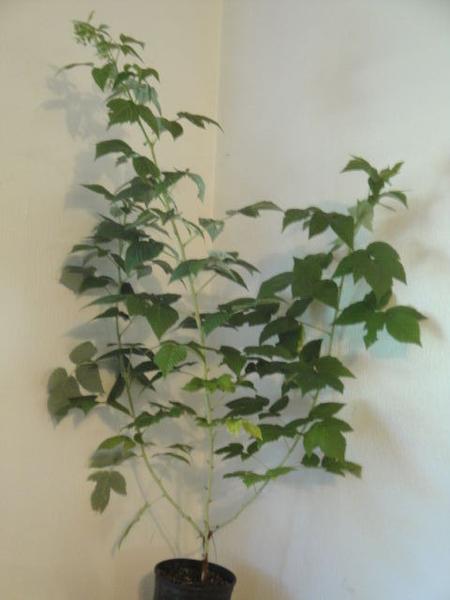
The last photo is an example of a #1 (1 gallon)Amity Red Raspberry, however, it is not the exact plant that you will receive. Your plant will be approximately 1-2 years old and 2'-3' tall. Plants shipped late Fall to early Spring may be pruned back and with out foliage.
Plant Highlight
Plant Highlight
Soil: Normal to rich, well drained.
Hardiness: Zone 4-9.
Plant Type: Ever-Bearing (Fall-Bearing).
Cane type: Primocane and floricane.
Height: 3'-4'.
Minimum temperature: Hardy to -20ºf to -30ºf.
Light: Full sun.
Pollination and Ripening
Pollination and Ripening
The Amity is self-pollinating, meaning it does not require another plant for fruit production. However, planting multiple bushes can increase yield. It is an everbearing raspberry, producing two crops per year. The first, smaller crop ripens in June to July on second-year canes (floricanes). The second, larger crop ripens from August to October on first-year canes (primocanes).
Shipping Restrictions
Shipping Restrictions
Can not ship to HI.
Planting Guide
Planting Guide
Raspberry Planting Guide
1. Site Selection:
• Choose a sunny location with well-drained soil.
• Avoid low-lying areas prone to early season frosts and areas with heavy clay soil.
• Adequate air circulation helps prevent diseases.
2. Time of Year to Plant:
• Container plants can be planted year round in areas with mild winters.
• Spring through early fall is preferable for areas with harsh winters.
3. Soil Preparation:
• Raspberries prefer slightly acidic to slightly alkaline soil (pH 5.5-6.5).
• Amend soil with well-rotted compost or aged manure.
• Ensure good drainage to prevent root rot.
4. Planting:
• Space plants 2-3 feet apart in rows, with rows 6-8 feet apart.
• Plant canes at the same depth they were grown in the nursery container.
• Water thoroughly after planting to settle the soil.
5. Watering:
• Keep the soil consistently moist, especially during dry periods.
• Water at the base of the plant to avoid wetting the foliage.
• Reduce watering in the winter to prevent root rot.
6. Fertilizing:
• Apply a balanced fertilizer in early spring before new growth.
• Use a fertilizer with a higher phosphorus content for better fruit production.
• Avoid excessive nitrogen, which can lead to vigorous vegetative growth.
7. Support Structures:
• Install a trellis or support system for the canes to keep them upright.
• This makes harvesting easier and improves air circulation.
8. Pruning:
Ever-bearing Raspberries:
• Prune the entire plant to ground level in late winter or early spring.
• This promotes a larger fall crop and minimizes the summer harvest.
• Remove spent floricanes after each fruiting period.
Spring-bearing Raspberries:
• Prune all canes that bore fruit to ground level after harvesting.
• Thin remaining canes, leaving 4-6 of the healthiest per square foot.
• Tie canes to a support system to prevent them from bending under fruit weight.
9. Pest and Disease Control:
• Monitor for pests like aphids and Japanese beetles.
• Fungal diseases can be controlled with proper spacing and fungicide applications if necessary.
10. Harvesting:
• Harvest ripe berries gently to avoid damaging the plant.
• Pick berries regularly to encourage continuous fruiting.
11. Winter Care:
• Mulch around plants in late fall to protect roots from freezing temperatures.
• Consider covering plants with burlap in severe winter climates.
Remember that specific recommendations may vary based on the raspberry variety and local climate conditions. Regular monitoring and adjustments to care practices will contribute to a healthy and productive raspberry patch.
Chill Hours
Chill Hours
Amity raspberries require approximately 800–1,000 chill hours to perform well. Adequate winter chilling supports vigorous cane development and dependable fruit production in cooler climates.
Share